
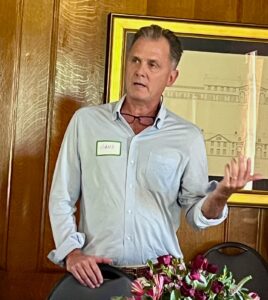
A Conversation with Hans Dekker, President of the Community Foundation of New Jersey
Impact100 Garden State is a special fund of the Community Foundation of New Jersey (CFNJ), a nonprofit 501(c)(3) organization that hosts charitable funds for philanthropic families, organizations, and companies. In 2024, CFNJ fundholders recommended more than $100 million in grants to New Jersey causes and communities.
As president of CFNJ since 2003, Hans Dekker has a unique perspective on the state of philanthropy in New Jersey. As the New Jersey Nonprofits Trends and Outlook 2025 report shows, demand for services is rising faster than funding. Meanwhile, executive branch directives and federal budget and tax decisions have severely strained nonprofits’ ability to meet community needs.
We asked Hans to give our members a snapshot of the fast-evolving trends shaping private philanthropy in New Jersey.
How has giving changed in New Jersey in recent years?
One big shift we’ve seen over the past few decades is the globalization of giving. People have always responded to international crises—by donating to the Red Cross, for example. But now, they may be giving to a primate rescue facility in Africa, to build a school in Nepal, or to fund malaria prevention. These causes, which weren’t as visible 30 or 40 years ago, now compete with local charities for the same charitable dollars.
That said, there remains strong interest in local giving. About two-thirds of the dollars we oversee go to nonprofits and communities right here in New Jersey.
Are there particular areas where need has increased most in recent months?
The breadth of the cuts is remarkable—many sectors have been touched.
Food pantries and domestic violence programs have been hit hard by cuts in federal support, as have organizations supporting people facing homelessness. Public broadcasting has been deeply affected—NJ PBS will cease traditional broadcasting in June 2026. Cuts to Medicaid are also significant, so I’d put healthcare on the list of major areas of concern. A number of green infrastructure and environmental initiatives have been cut as well.
In May 2025, CFNJ launched the NJ Strong Emergency Fund, providing rapid-response grants to nonprofits facing federal funding freezes or terminated contracts. We raised just over $1 million from our fundholders—and received about $3.7 million in requests. That money went fast.
Many nonprofits have relied on public funding for the bulk of their budgets and have had little experience raising private contributions. Now they must compete in an already crowded private fundraising space. There are more organizations to support so even those not directly affected by federal cuts are feeling the pressure.
What advice do you have for donors who want to maximize their impact?
It’s important to hold close the organizations you truly care about during stressful times—and to stretch a little harder in your giving. We saw that happen during the financial crisis of 2008, and I think it’s happening again now.
I’d also suggest looking at advocacy groups that focus on legal or policy-level work to change some of the choices that are being made in areas you care about.
Collective giving, as you do at Impact100 Garden State, is more important than ever, because you are going to pick some folks that you think are doing a great job and deliver them significant resources, where maybe that wouldn’t happen if people gave individually.
And it’s healthy to keep some “venture capital,” so to speak, in your giving mix. Programs like Impact100 challenge nonprofits to think creatively—what would you do differently if you had resources to back it up? It forces nonprofits to think beyond the day to day, and we’ve seen some really great ideas come out of that.
What lessons can New Jersey nonprofits draw from this moment?
New Jersey has a lot of nonprofits [about 55,000 active tax-exempt organizations]—and that reflects how our communities govern themselves. We tend to create small, local nonprofits to serve local needs.
That’s admirable, but it also means there may be opportunities for nonprofit mergers. Mergers are difficult and often driven by financial pressure, but they can result in stronger and more resilient organizations.
Ultimately, I’m optimistic. About 80 percent of charitable giving in the U.S. comes from individuals, and Americans are remarkably philanthropic. We also have a deep commitment to supporting our nonprofit sector—something that’s unique in the world. I believe we’ll weather this storm and emerge with a healthier, stronger network of nonprofits.